When a caller cannot answer an intake question
Decide which answers matter now, which can wait, and when a person needs to take the next step.
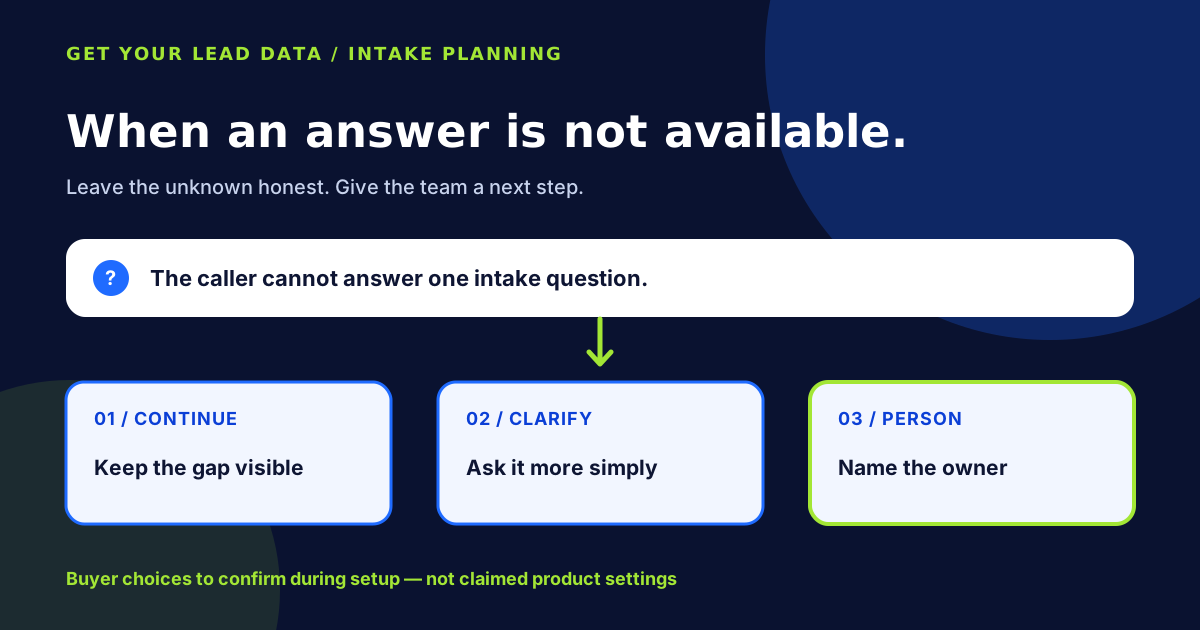
A caller who cannot answer one question may still be a good person for your sales team to speak with. The first decision is whether that detail is needed on this call. If not, your team can plan to leave it for a later conversation. If it changes who should respond, decide what clarification or human next step is appropriate. Do not fill the gap with a guess.
Get Your Lead Data is built around the intake questions your team chooses and a sales next step. Before setup, decide why each question belongs in the first call and what should happen when its answer is unavailable. This is a buyer-side planning guide, not a list of product settings.
Give each question a job
Start with the person who will use the information. Does the answer help them reach the caller, understand the request, or decide who should take the next conversation? If nobody can explain how it changes that next step, consider removing the question from the first call.
The aim is honest context, not a perfect-looking record. “Unknown” is more useful than a confident but invented value. A missing answer also should not be treated as an automatic judgment about the quality of the lead; that is a sales decision for the receiving team.
Plan the exception before the first call
For each question that a caller might not answer, discuss three possible planning choices. Ask the sales agent during setup which of your desired paths can actually be configured:
- Continue: If the answer is helpful but not necessary to identify the request, decide what other information is enough for a person to follow up.
- Clarify: If the caller may understand a simpler version of the question, prepare one plain-language follow-up instead of repeating a form-like prompt.
- Bring in a person: If the missing answer leaves the route unclear, or the caller asks for a person, name the role that should receive the situation and the context they need.
Illustrative planning example: A caller knows which service they want but not the model of the equipment involved. One business may choose to note that the model is unknown and let a salesperson ask later; another may need that detail before choosing the next team. Neither path is a claimed Get Your Lead Data configuration until confirmed during setup.
Use a small unanswered-question worksheet
Make one row per proposed question. You can write this on paper; it is not a representation of a platform screen:
- Question: What will the caller hear?
- Purpose: Why does the next person need the answer?
- Unavailable answer: What should remain explicitly unknown or declined?
- Next-step owner: Who decides what happens if the route remains unclear?
Read the question aloud. Could a first-time caller reasonably know the answer? If not, a later sales conversation may be the better place for it. Compare your worksheet with the guide to choosing first-call questions and the guide to naming a post-call owner. The question and the receiving person should fit together.
Bring the unknowns to setup
Your initial flow is sales-assisted. Bring the question list, likely unanswered cases, and desired handoff owner to that conversation. Confirm which paths can be configured and what context the sales team will receive. Later in-platform changes should preserve the same agreed next-step logic rather than quietly changing what the team expects.
For a straightforward inbound lead path, see how Get Your Lead Data works and tell us what your team needs from the first call. Start with the shortest useful question set—including the honest plan for what happens when a caller cannot provide a detail.